Contact us
Send Us Your Case Details
We’ll respond and let you know the best way to proceed with your case.
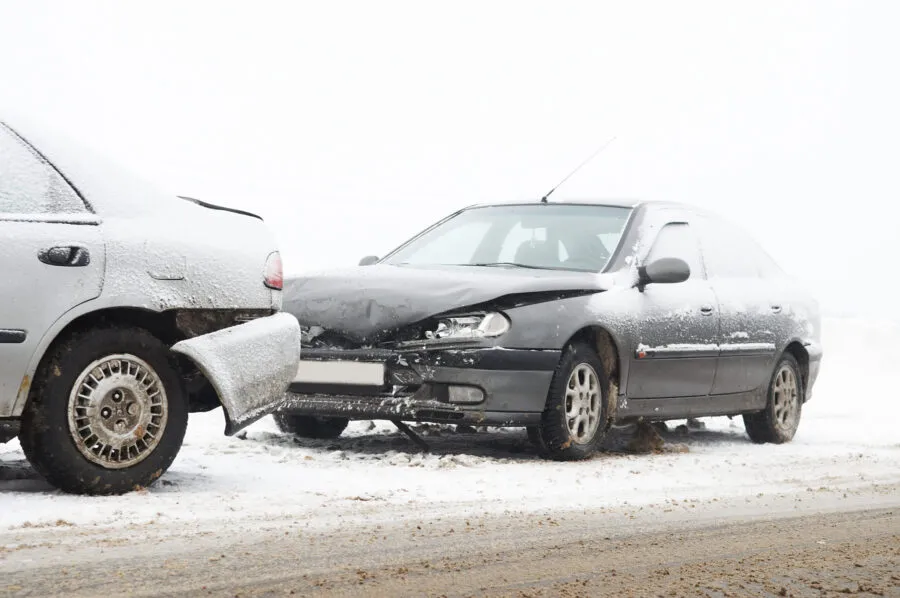
Driving on I-264 during the winter months presents a unique set of challenges for motorists in Virginia Beach and the surrounding areas. While Virginia does not experience the prolonged, deep freezes common in northern states, the region is prone to sudden drops in temperature, freezing rain, and dense fog that can transform a standard commute into a hazardous situation. When winter weather crashes occur on I-264, questions about Virginia car accident liability are rarely straightforward. Drivers often assume that poor weather conditions absolve them of responsibility, but Virginia law holds motorists to a high standard of care regardless of the environment.
Understanding how ice, fog, and visibility issues influence liability is critical for anyone involved in an interstate collision. The legal framework in Virginia requires drivers to adapt their behavior to the conditions on the road. Failure to do so can result in serious legal and financial consequences, particularly given the state’s strict contributory negligence laws. Victims of winter driving accidents in Virginia often face complex insurance battles where the opposing party attempts to blame the weather rather than their own unsafe driving practices. Deering Hedrick is committed to helping residents navigate these difficult legal landscapes to ensure fair outcomes.
Interstate 264 is a vital artery connecting Virginia Beach, Norfolk, and Portsmouth, carrying a high volume of daily commuter traffic. This density, combined with high travel speeds and specific infrastructure features, makes the roadway particularly susceptible to winter weather crashes. Unlike local roads, where traffic moves more slowly, interstate travel leaves little margin for error when conditions deteriorate. A patch of ice or a sudden bank of fog can lead to multi-vehicle pileups before drivers have time to react.
Bridges and overpasses are common features along I-264, and these structures freeze before the rest of the roadway. Cold air circulates both above and below bridge surfaces, causing them to lose heat rapidly. Drivers traveling at highway speeds may not realize they are transitioning from wet pavement to a sheet of ice until they lose traction. This abrupt change in road surface friction is a leading cause of loss-of-control accidents during winter months.
Additionally, the coastal location of the Hampton Roads area contributes to unpredictable weather patterns. Warm air from the ocean mixing with colder inland air can create dense fog banks that severely limit visibility. When combined with freezing rain or sleet, visibility can drop to near zero in moments. High-speed travel on I-264 becomes treacherous under these conditions, as drivers may not see stopped traffic or debris ahead until it is too late to stop safely. The sheer volume of vehicles means that one driver losing control can trigger a chain reaction, involving numerous cars and complicating the subsequent investigation into the I-264 accident.
Virginia operates under a fault-based system for car accidents, meaning the person who caused the crash is responsible for the resulting damages. However, determining fault becomes complicated when the weather is a contributing factor. A common misconception is that if a driver slides on ice or cannot see through fog, the accident is an “act of God” and therefore unavoidable. In reality, the law expects drivers to exercise reasonable care under the circumstances.
Reasonable care means adjusting driving behavior to match the current road conditions. If it is snowing, raining, or foggy, a prudent driver would slow down, increase following distance, and turn on headlights. A driver who continues to travel at the posted speed limit during an ice storm is likely acting negligently, even if they are technically obeying the speed limit sign. The posted limit is designed for ideal conditions, not hazardous ones. Therefore, Virginia car accident liability often hinges on whether the driver’s actions were reasonable given the specific weather risks at the time of the crash.
Furthermore, Virginia is one of the few states that follows the doctrine of contributory negligence. Under this strict rule, if an injured driver is found to be even one percent at fault for the accident, they may be barred from recovering compensation entirely. In winter weather crashes, insurance companies frequently use this doctrine to deny claims. They might argue that the victim should have reacted faster or driven slower, attempting to shift a small portion of the blame onto the injured party. This makes it essential to establish that the other driver’s negligence was the sole cause of the collision, necessitating a thorough understanding of how Virginia law applies to hazardous road conditions.
Ice is perhaps the most deceptive hazard on winter roads. Black ice, in particular, poses a significant threat because it is transparent and blends in with the pavement, often appearing as nothing more than a wet spot. Drivers on I-264 may hit a patch of black ice at highway speeds, resulting in an immediate loss of steering and braking control. While the formation of ice is a natural occurrence, the reaction of the driver to these conditions is a legal matter.
When a vehicle slides on ice and strikes another car, the driver who lost control is generally presumed to be at fault. The legal reasoning is that the driver should have anticipated the possibility of ice—especially on bridges or during freezing temperatures—and adjusted their driving accordingly. Failure to maintain control of a vehicle is often cited as evidence of negligence. Arguments that the ice was unexpected are rarely successful in avoiding liability, particularly if weather reports warned of freezing conditions.
Speed is a critical factor in these cases. Even driving slightly below the speed limit may be considered reckless if the roads are glazed with ice. Liability investigations will often look at whether the driver was traveling too fast for conditions, following too closely, or making sudden maneuvers that are unsafe on slick surfaces. If a driver slams on their brakes on an icy patch, causing a spin-out that hits another vehicle, their improper braking technique may be deemed negligent. Experienced attorneys at Deering Hedrick understand how to analyze the physics of an icy road accident in Virginia to demonstrate that the crash was caused by driver error rather than unavoidable environmental factors.
Fog is a frequent hazard in the coastal regions of Virginia, often descending rapidly and reducing visibility to a few hundred feet or less. On a high-speed interstate like I-264, this reduction in visibility is extremely dangerous. Drivers rely on visual cues to maintain lane position and safe distances from other vehicles. When those cues disappear, the risk of collision increases exponentially. A fog-related car accident on I-264 often raises immediate questions about speed, following distance, and whether the driver adjusted to visibility conditions.
Liability in fog-related crashes typically centers on speed and lighting. Drivers are legally obligated to drive at a speed that allows them to stop within their range of vision. If visibility is limited to fifty feet, driving at sixty miles per hour is inherently negligent because the driver cannot stop in time to avoid an obstacle they spot. Consequently, a driver who rear-ends another vehicle in dense fog is almost always found at fault for driving too fast for the visible distance.
The improper use of vehicle lighting also plays a role in fault determinations. High-beam headlights can reflect off fog droplets, worsening visibility for the driver and blinding oncoming traffic. Conversely, driving without lights makes a vehicle nearly invisible to others. Failure to use low-beam headlights and drive appropriately for visibility can be considered a breach of the duty of care. In multi-vehicle pileups caused by fog, liability can be divided among several drivers if evidence shows multiple parties failed to exercise appropriate caution. A reduced visibility crash requires a detailed reconstruction to determine who initiated the chain of events and who failed to react appropriately.
Rear-end collisions are the most common type of accident resulting from winter weather. Slippery road surfaces significantly increase stopping distances. A vehicle traveling at fifty miles per hour on dry pavement requires a certain distance to stop; on ice or snow, that distance can triple or quadruple. When drivers fail to account for this reduced traction by increasing their following distance, they create a high risk of rear-end impacts.
In Virginia, the rear driver in a rear-end collision is typically presumed to be at fault. This presumption holds even in winter weather. The law dictates that a driver must maintain a safe distance from the vehicle in front to allow for unexpected stops. If the lead car brakes suddenly for a patch of ice or a stopped vehicle, the following driver must have enough space to stop safely without making contact.
Arguments that the lead driver stopped “too suddenly” are difficult to substantiate when slick roads are involved. The following driver has the responsibility to leave a sufficient buffer zone to accommodate the erratic behavior of other motorists and the unpredictable nature of the road surface. However, there are exceptions. If the lead driver’s brake lights were non-functional, or if they cut off the rear driver aggressively before braking, liability might be shared or shifted. Establishing these facts in winter driving accidents Virginia requires careful examination of vehicle damage and witness accounts to overcome the presumption of fault against the rear driver.
While weather conditions create the environment for a crash, the weather itself cannot be sued or held liable for damages. Ice, snow, and fog are external factors that drivers must manage. However, there are rare scenarios where liability may not rest entirely on a single driver, or where third parties could be involved.
One such scenario involves sudden, unforeseeable medical emergencies that coincide with bad weather, although this is a strict and difficult defense to prove. More commonly, liability questions arise when road maintenance agencies fail in their duties. If a government entity or contractor was responsible for pre-treating roads or clearing snow and failed to do so in a reasonable timeframe or according to established protocols, there might be a potential claim. However, sovereign immunity laws in Virginia make suing government bodies extremely challenging.
In multi-vehicle crashes, the “sudden emergency” doctrine is sometimes raised as a defense. A driver might argue that they were confronted with a sudden, unexpected hazard—like a deer jumping onto an icy road—that left them with no safe options. Even then, the driver must prove that their reaction to the emergency was reasonable. If they were already speeding when the deer appeared, the defense likely fails. Deering Hedrick emphasizes that successful defenses based on “unavoidable accident” theories are exceptionally rare in winter weather cases because weather forecasts and visible conditions usually provide sufficient warning for drivers to adjust their behavior.
Proving liability in the aftermath of a winter crash relies heavily on physical and testimonial evidence. Because road conditions change rapidly—ice melts and fog lifts—documenting the scene immediately is vital. The police report is often the first piece of critical evidence. It contains the responding officer’s observations about road conditions, weather, and any citations issued to drivers for reckless driving or failure to maintain control.
Photographs of the scene provide undeniable proof of the environment at the time of the crash. Images showing skid marks, the position of vehicles, and the state of the roadway (wet, snowy, or icy) help reconstruct the sequence of events. Skid marks on dry pavement look different than those on wet or icy surfaces, and the absence of skid marks might indicate a driver did not brake at all before impact.
Witness statements are equally important. Other drivers who witnessed the I-264 accident can testify to the speed of the vehicles involved and the visibility at the moment of impact. Their accounts can corroborate or contradict a driver’s claim that they were driving carefully. Additionally, data from the vehicle’s event data recorder (the “black box”) can reveal precise information about speed, brake application, and steering input in the seconds before the crash. This electronic evidence is difficult to dispute and often serves as the deciding factor in proving negligence in interstate accidents in Virginia.
The combination of high speeds, complex liability laws, and the potential for severe injuries makes winter crashes on I-264 particularly difficult to resolve without professional assistance. Working with a Virginia Beach car accident lawyer is often critical after a winter weather crash on I-264, particularly when liability is disputed or serious injuries are involved. Insurance adjusters are trained to minimize payouts, and they often exploit the complexities of winter weather liability to undervalue claims. They may argue that the victim was driving too fast for conditions, thereby invoking Virginia’s contributory negligence rule to deny the claim altogether.
Serious injuries resulting from high-speed interstate collisions—such as traumatic brain injuries, spinal cord damage, or multiple fractures—require substantial financial resources for treatment and recovery. An unrepresented victim may accept a settlement offer that fails to cover long-term medical costs or lost wages. Ensuring that all damages are accounted for requires a comprehensive understanding of personal injury law and the ability to negotiate aggressively with insurance carriers.
Legal counsel plays a pivotal role in preserving evidence that might otherwise be lost. An attorney can send preservation letters to prevent the destruction of vehicle black box data or secure traffic camera footage before it is overwritten. By conducting an independent investigation, legal professionals can build a compelling case that accurately assigns fault, regardless of the weather conditions. Deering Hedrick has extensive experience handling Virginia car accident liability cases and understands the strategies necessary to protect the rights of those injured by negligent drivers on winter roads. Schedule a confidential consultation with Deering Hedrick by calling (757) 383-6848 today.