Contact us
Send Us Your Case Details
We’ll respond and let you know the best way to proceed with your case.

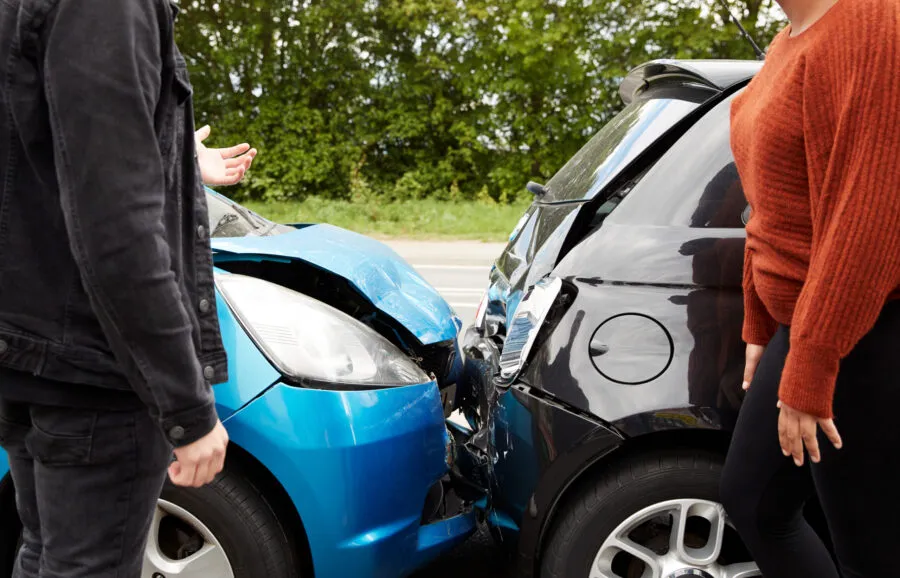
Few driving scenarios cause as much immediate anxiety as discovering the driver who just struck your vehicle has no insurance. For Virginia residents, a February crash often compounds this stress with hazardous winter conditions, lingering post-holiday financial pressures, and the physical pain of injury. When an at-fault driver cannot pay for the damages they caused, injured motorists must rely on their own insurance policies for relief. This process, known as an uninsured motorist claim, is a statutory safeguard designed to protect drivers from financial ruin, yet it is rarely straightforward.
Virginia law provides specific mechanisms for recovery through uninsured (UM) and underinsured motorist (UIM) coverage, yet understanding how these rules apply requires careful attention to policy language and state statutes. Insurance carriers often treat these claims with the same scrutiny as liability claims against strangers, meaning policyholders cannot assume their own insurer is automatically on their side. For those navigating the aftermath of a collision with an uninsured driver in Virginia, understanding the nuances of UM/UIM coverage is the first step toward securing fair compensation.
February presents a unique convergence of risk factors on Virginia roadways that can increase the likelihood of an uninsured driver accident. Winter weather patterns frequently create slick surfaces, black ice, and reduced visibility, making it difficult for even attentive drivers to stop in time. However, environmental conditions tell only part of the story. The drivers most likely to lack adequate insurance are often those facing financial instability, and the economic strain following the holiday season often leads to lapsed policies during the early months of the year.
When financial obligations pile up, auto insurance premiums are sometimes the first expense drivers skip. This means that during February, the probability of encountering a motorist without active liability coverage—or with only state-minimum limits—is statistically significant. When these drivers lose control on icy patches or fail to brake on wet pavement, the resulting collision leaves the victim with significant vehicle damage and medical bills but no liability policy to claim against. Understanding this seasonal risk helps injured drivers recognize why an immediate investigation into insurance status is vital following a winter crash.
The moments immediately following a collision are chaotic, but the legal reality sets in once the police report is filed and insurance information is exchanged. If the at-fault driver admits they have no insurance, or if the police determine their policy has lapsed, the path to car accident compensation shifts dramatically. Instead of pursuing a claim against the other driver’s carrier, the injured party must look to their own policy. This transition from a third-party liability claim to a first-party contractual claim alters the legal strategy required to recover damages.
In Virginia, you must notify your own insurance company promptly that you were hit by an uninsured driver. Failure to provide timely notice can jeopardize coverage. Once the claim is open, your insurer effectively steps into the shoes of the at-fault driver. They will investigate the accident, assess liability, and scrutinize the extent of your injuries just as a defense attorney would. It is a misconception that because you pay premiums, your insurer will simply write a check. The company has a financial interest in minimizing the payout, which means they will look for reasons to argue that you were partially at fault or that your injuries pre-existed the crash.
To navigate a claim successfully, one must distinguish between uninsured motorist (UM) and underinsured motorist (UIM) coverage. Virginia law requires all auto insurance policies issued in the state to include UM coverage equal to the policy’s liability limits. This coverage activates when the at-fault driver has no insurance at all, or in hit-and-run scenarios where the other driver cannot be identified. Essentially, UM coverage ensures that you have a source of recovery up to the limits you selected for your own protection. These requirements stem from broader principles of Virginia personal injury law, which govern how insurance disputes are evaluated after a serious motor vehicle collision.
Underinsured motorist coverage applies differently. It comes into play when the at-fault driver has insurance, but their liability limits are insufficient to cover the total cost of your damages. For example, if you suffer severe injuries resulting in $100,000 of medical bills, but the other driver only carries the state minimum of $30,000 in liability coverage, UIM coverage can bridge the gap. Recent changes in Virginia law regarding how UIM benefits stack have made this coverage even more valuable, allowing injured drivers to access more of their own policy limits without the offset reductions that previously limited recovery. Both types of coverage are critical safety nets, but accessing the full value of a UM/UIM claim Virginia residents are entitled to requires strict adherence to procedural rules.
The complexities of Virginia insurance law can significantly influence the final outcome of an insurance claim after a car accident. One of the most critical aspects involves policy limits and the prioritization of coverage. If you are a passenger in someone else’s vehicle, for instance, you may be eligible to stack coverage from the host vehicle’s policy and your own household policy. Identifying all available layers of coverage is essential to maximizing car accident compensation, especially in cases involving catastrophic injury where medical costs exceed standard limits. For injured motorists navigating an uninsured motorist claim, Deering Hedrick regularly helps identify hidden coverage opportunities that insurance companies do not volunteer without pressure.
However, specific contractual clauses can also limit recovery if not handled correctly. Most policies contain consent-to-settle clauses, which require the injured party to obtain written permission from their UIM carrier before accepting a settlement offer from the at-fault driver’s liability insurer. Accepting a settlement without this consent can extinguish your right to pursue underinsured motorist coverage entirely. Deering Hedrick frequently encounters clients who unknowingly waived their rights to significant additional compensation by accepting a quick check from the liability carrier. Understanding these technical triggers is why legal oversight is necessary before signing any release forms.
Procedural missteps are the primary reason valid claims are devalued or denied. One common error involves the recorded statement. Insurance adjusters will contact you shortly after the accident, requesting a recorded account of the event. While this may seem routine, adjusters are trained to ask questions that can elicit responses damaging to your case. A simple comment downplaying pain or estimating speed can be used later to argue against the severity of the injury or to suggest contributory negligence. Virginia follows a strict contributory negligence rule, meaning if you are found even one percent at fault, you may be barred from recovery.
Another critical mistake is delaying medical treatment after an uninsured driver accident. In the context of a UM/UIM claim, Virginia courts and adjusters look for a consistent timeline of medical care to validate injuries. If you wait weeks to see a doctor after being hit by an uninsured driver, the insurer will argue that your injuries were not serious or were caused by an intervening event. Additionally, failing to strictly follow the notice provisions in your policy can provide the insurer with a technical defense to deny coverage. Every policy has specific deadlines for reporting a claim, and missing these windows can be fatal to your case regardless of the accident’s severity.
Policyholders often expect their own insurance company to treat them with more deference than a third-party insurer would. Unfortunately, in the context of an uninsured motorist claim, the relationship becomes adversarial. Because the insurer is liable for paying the damages that the at-fault driver cannot, they adopt a defensive posture. They utilize their resources to scrutinize medical records, question the necessity of treatments, and challenge lost wage calculations. The adjuster’s goal is to resolve the claim for the lowest possible amount that aligns with their risk assessment, not necessarily what is fair to the policyholder.
This dynamic is particularly challenging because it involves a contract the driver pays for. You pay premiums for years to ensure you are protected, yet when you need to use that protection, you face resistance. The insurer may delay processing the claim, request redundant documentation, or offer a lowball settlement early in the process hoping you are desperate for funds. An experienced Virginia car accident lawyer understands these tactics and knows how to force the insurer to evaluate the claim fairly by presenting compelling evidence of liability and damages that is difficult to ignore.
The intersection of winter driving conditions, complex insurance statutes, and the adversarial nature of claims makes professional legal representation essential. A Virginia car accident lawyer does more than just file paperwork; they manage the strategic direction of the case. This includes conducting an independent investigation to prove the other driver was solely at fault, which is crucial in a contributory negligence state. It also involves locating all applicable insurance policies, including household policies that might provide additional coverage layers.
Furthermore, legal counsel serves as a shield between the injured party and the insurance adjusters. By handling all communications, attorneys prevent clients from making inadvertent admissions that could harm the case. They also ensure that medical providers are properly communicated with, helping to build a comprehensive medical file that substantiates the need for underinsured motorist coverage. When an insurer refuses to offer a fair settlement, litigation may be necessary. Filing a lawsuit against the uninsured driver—and serving your own carrier—is a formal legal process that triggers the insurer’s duty to defend or settle, often leading to better results than negotiation alone.
If you have been injured in a collision with a driver who lacks adequate insurance, time is a critical factor. The earlier you engage legal counsel, the more effectively your rights can be preserved. Evidence such as skid marks, surveillance footage, and witness memories can fade or disappear quickly, particularly in winter weather conditions. Deering Hedrick has extensive experience helping Virginia residents navigate the complexities of uninsured driver accident claims. We understand the tactics insurance companies use to minimize payouts and are prepared to advocate aggressively for the full compensation you deserve.
Delays in reporting, investigation, or legal action can jeopardize coverage and reduce the compensation available under UM/UIM policies. Do not let an insurance company dictate the value of your health and recovery. If you are facing mounting bills and uncertainty after being hit by an uninsured driver, professional legal support can provide the clarity and leverage needed to move forward.
To protect your rights and explore your options, schedule a confidential consultation with Deering Hedrick by calling (757) 383-6848 today.