
Contact us
Send Us Your Case Details
We’ll respond and let you know the best way to proceed with your case.

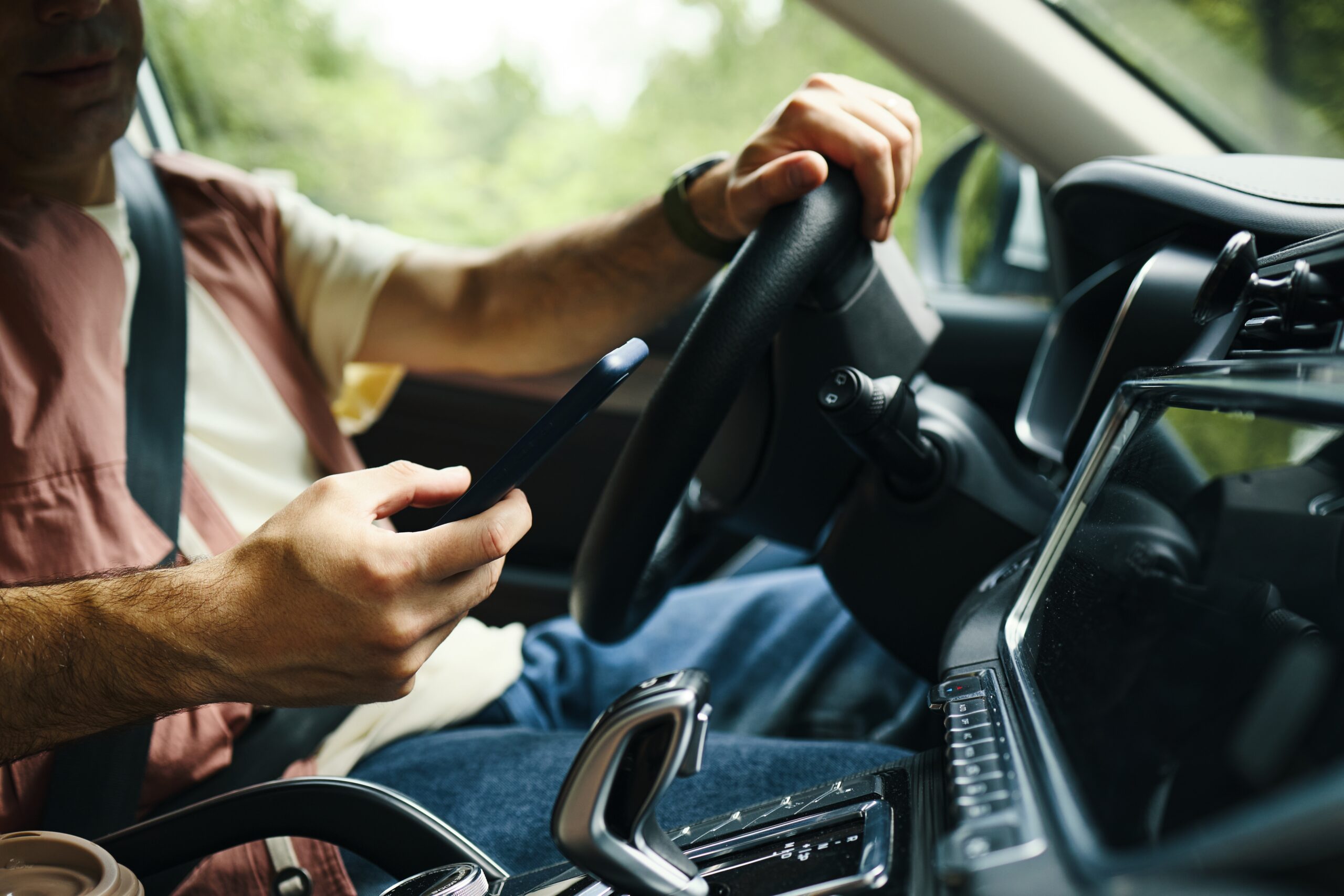
Distracted driving is one of the leading causes of serious car accidents in Virginia and across the country. Every year, thousands of people are injured or killed in crashes that could have been prevented if a driver had simply kept their attention on the road. Distraction behind the wheel takes many forms, and not all of them are obvious. Some drivers know they are distracted. Others are completely unaware that their focus has shifted away from the road until it is too late. Perceived and actual attentiveness is part of what makes distracted driving so persistent and so dangerous, even among drivers who consider themselves responsible and careful.
Deering Hedrick, P.C. represents car accident victims throughout Virginia Beach and Hampton Roads. If a distracted driver caused your injuries, call (757) 383-6848 to speak with an experienced Virginia Beach personal injury attorney today.
Distracted driving is any activity that takes a driver’s eyes, hands, or mental focus away from the task of operating a vehicle safely. It is not limited to cell phone use, though phones are among the most common and most dangerous sources of distraction on the road today.
Distracted driving is so dangerous for several interconnected reasons. It reduces reaction time, meaning drivers cannot respond to sudden hazards as quickly as an attentive driver would and increases the likelihood of high-impact collisions because the driver may not brake at all before striking another vehicle or pedestrian. Cases like this almost always involve preventable behavior, making the harm it causes a matter of someone’s choice rather than an unavoidable accident.
Researchers and safety experts classify driving distractions into three distinct categories. Many dangerous behaviors involve more than one type simultaneously, which is what makes certain distractions especially deadly.
A visual distraction is anything that causes a driver to look away from the road ahead. This can happen for as little as two or three seconds, but at highway speeds that is enough time to travel the length of a football field without any awareness of what lies ahead. Common examples include:
Visual distractions are particularly dangerous because the driver has no awareness of changing conditions, slowing traffic, or hazards directly in their path during the entire time their eyes are elsewhere.
A manual distraction occurs when a driver removes one or both hands from the steering wheel to perform another task. Full vehicle control requires both hands, and any reduction in that control limits the driver’s ability to respond to sudden changes in traffic. Common examples include:
Manual distractions tied to phone use are among the most frequently cited causes of preventable accidents because they often combine with visual distraction at the same time.
Cognitive distractions are the least obvious and often the most underestimated. This type of distraction occurs when a driver’s mental focus shifts away from the task of driving even when their eyes are on the road and hands are on the wheel. Common examples include:
A driver who is cognitively distracted may be looking forward but not truly processing what they are seeing, which means their reaction to a hazard will be delayed even without any physical distraction present.
If you were injured by a distracted driver in Virginia Beach, call Deering Hedrick, P.C. at (757) 383-6848 to discuss your legal options.
Understanding how each distraction type shows up in real driving situations helps illustrate why these behaviors are so consequential.
Phone use behind the wheel involves all three types of distraction simultaneously. Texting requires visual attention to the screen, manual removal of a hand from the wheel, and cognitive focus on composing or reading a message.
The same applies to checking social media, using apps, or dialing a number. This combination is precisely why phone-related distraction is associated with some of the most serious crashes on Virginia roads.
Eating or drinking while driving requires at least one hand off the wheel and periodic visual attention to the food or cup rather than the road. Adjusting navigation, changing music, or interacting with passengers all pull cognitive and sometimes visual focus away from driving.
These behaviors feel routine, which is part of what makes them so common and so consistently underestimated as crash risks.
Looking at the scene of another accident, reading a roadside billboard, or watching an unusual vehicle or event outside the car are all visual distractions that take a driver’s gaze away from what is directly ahead. External distractions contribute to secondary crashes at accident scenes and to lane departure incidents when a driver’s attention is captured by something off the road.
Distracted driving accidents can lead to serious injuries. Contact Deering Hedrick, P.C. at (757) 383-6848 for help holding the responsible party accountable.
In Hampton Roads, tens of thousands of crashes occur each year, with Virginia Beach consistently recording the highest totals in the region. Distracted driving is a major contributor to the most frequent crash types seen locally.
Rear-end crashes are the most common result of visual and cognitive distraction. A driver who is not watching traffic ahead may not notice vehicles slowing or stopping until it is too late to brake, striking the vehicle in front at or near full speed. High traffic volumes and stop-and-go conditions on routes like Virginia Beach Boulevard, Hampton Boulevard, and I-64/I-264 make inattention especially likely to end in a rear-end crash.
Manual and cognitive distractions frequently cause drivers to drift out of their lane without realizing it. A momentary loss of steering attention can result in a sideswipe collision with an adjacent vehicle or a departure from the road entirely. Multi-lane arterials and highways in Hampton Roads see frequent lane changes, so even brief distractions can cause drifting and sideswipes.
Distracted drivers regularly fail to notice traffic signals, yield signs, or vehicles already in an intersection. These crashes can involve T-bone impacts at full speed and are among the most dangerous collision types for both drivers and passengers. With thousands of crashes annually across the region, signalized intersections and busy turns are common sites for angle and T-bone collisions when drivers miss lights or yield signs.
Virginia has enacted specific laws targeting distracted driving, and those laws have direct relevance to personal injury claims that arise from distraction-related crashes.
Virginia Code § 46.2-1078.1 makes it unlawful for any person to operate a moving motor vehicle on a Virginia highway while manually entering letters or text, or reading email or text messages, on a handheld personal communications device.
Virginia Code § 46.2-818.2 prohibits drivers from holding any handheld personal communications device while operating a motor vehicle on a highway, with limited exceptions for emergencies, lawfully stopped vehicles, and certain official or GPS uses.
Both offenses are primary offenses, meaning an officer can stop a driver solely for suspected texting or handheld use, without any other traffic violation. Penalties may include:
Convictions typically carry DMV demerit points, and pre-paying the fine is treated as a guilty plea that goes on your driving record.
A traffic citation under § 46.2-1078.1 or § 46.2-818.2 is directly relevant to a personal injury claim. To build a compelling case that shows the at-fault driver breached the legal standard of care, our attorneys can use:
This may be able to serve as evidence that the driver violated a statutory duty, which supports a negligence argument at the heart of any injury case.
Virginia applies a strict contributory negligence rule that bars recovery entirely if the injured party is found even partially at fault for the accident. In practical terms, if a jury or insurer determines you were 1% responsible for the collision, you may be prevented from recovering any compensation at all.
This makes it especially important in distracted-driving cases to:
At Deering Hedrick, P.C., we use Virginia’s distracted-driving statutes and crash evidence together to show the other driver’s full responsibility and to protect your claim against contributory negligence arguments.
If you have been injured in a Virginia Beach or Hampton Roads crash involving a distracted driver, call Deering Hedrick, P.C. at (757) 383-6848 to discuss your options with a results-driven personal injury attorney.
The most effective way to prevent distraction-related accidents is to eliminate distractions before they occur. Put your phone on silent or activate do-not-disturb driving mode before starting the vehicle, and set GPS destinations and adjust music before pulling out of the driveway.
Avoid eating, drinking, or grooming while driving, and pull over safely if you need to make a call, send a message, or address something in the vehicle. Take regular breaks on long drives to prevent cognitive fatigue, and avoid driving when emotionally distressed or exhausted, as both impair focus similarly to physical distractions.
If another driver’s inattention caused your accident, the steps you take immediately afterward affect both your health and your legal options:
An attorney handling a distracted driving case pursues the evidence that establishes what the driver was doing at the moment of the crash. That includes obtaining cell phone records through the legal discovery process, reviewing available traffic and surveillance camera footage, interviewing witnesses, and working with accident reconstruction experts when necessary. Your attorney also manages all communications with insurance companies and builds the case for the full compensation you are entitled to under Virginia law.
If you have been injured in a distracted driving accident, call Deering Hedrick, P.C. at (757) 383-6848. Our Virginia Beach attorneys are ready to help you move forward.
Deering Hedrick, P.C. was founded by Mike Deering and Chris Hedrick, two attorneys who bring over 30 years of combined legal experience and a reputation as fierce litigators and skilled negotiators. Based in Virginia Beach and serving clients throughout Hampton Roads including Chesapeake and Norfolk, our firm is built on the belief that every client deserves personalized attention, honest communication, and relentless advocacy at every stage of their case.
When you are dealing with the aftermath of a distracted driving accident, you need attorneys who take the time to understand your specific situation and craft a strategy tailored to your goals. That is exactly what Deering Hedrick, P.C. delivers.
Contact Deering Hedrick, P.C. at (757) 383-6848 to speak with a Virginia Beach personal injury lawyer about your distracted driving case today.